The Unannounced Licensing Visit: A Room by Room Checklist
Your licensor can arrive on any ordinary morning without warning. Walk your own home the way an inspector does, room by room, and fix the items that get written up most often.
The paperwork an inspector asks for in the first ten minutes
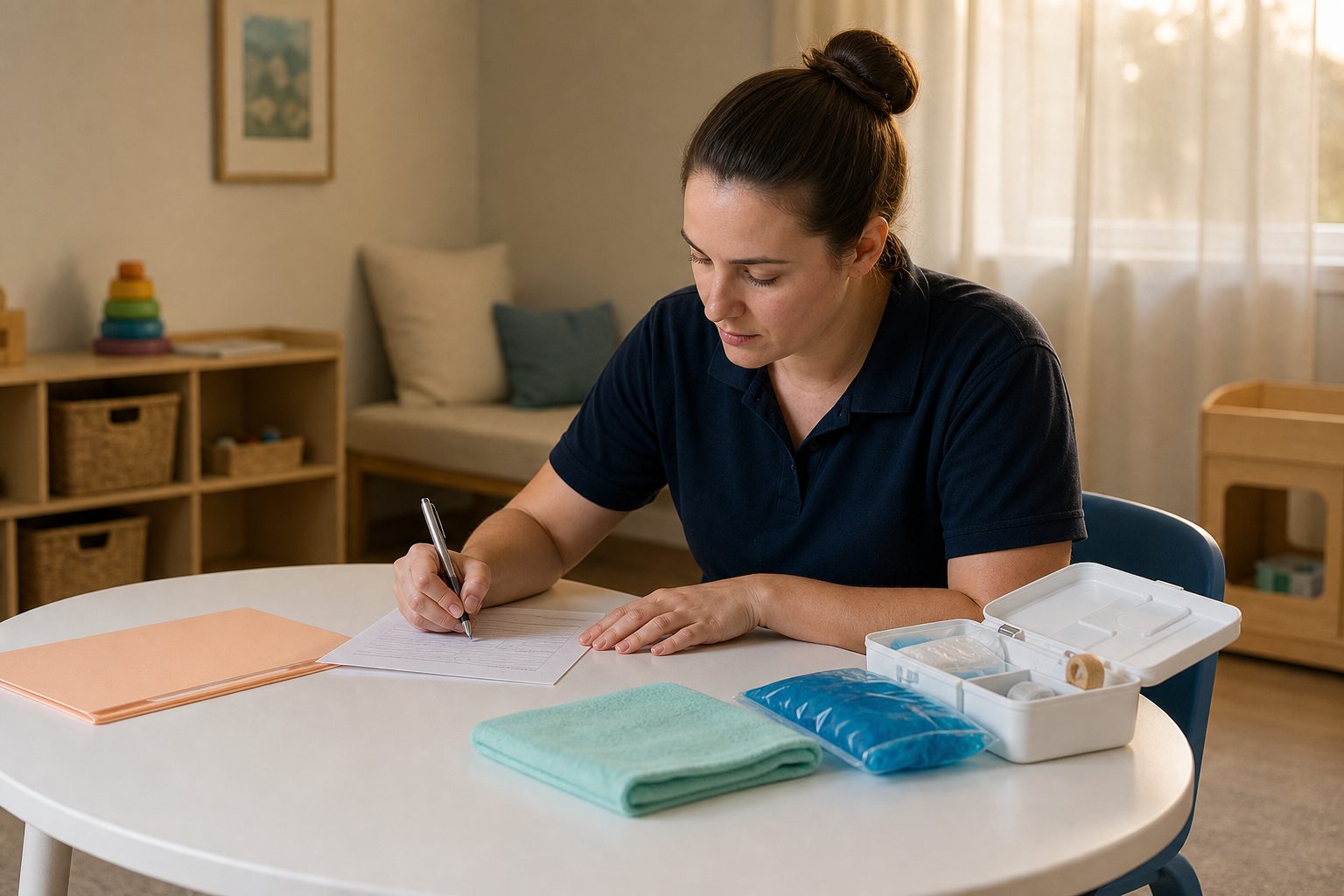
When a licensor steps through your door, paperwork is the first stop. Inspectors usually ask for your attendance sheets, daily logs, and emergency contact lists right away. These should be up to date and easy to hand over, any sign of scrambling can set the tone for the rest of their visit.
Most states require you to maintain daily attendance records for each child, noting arrival and departure times. Emergency contacts should be current, with backup numbers for parents or guardians. Inspectors expect to see your evacuation drill records, fire extinguisher inspections, and medication administration logs. Any gaps or old information can trigger a write-up.
If you care for infants, be ready with your safe sleep log. For all children, providers should have incident and injury reports available on request, not just stored for later. Your licensing certificate, current and posted in a visible spot, may also be checked in these first moments.
- Attendance records: complete and current
- Emergency contact list: up to date, within reach
- Evacuation drill logs: monthly or as required
- Fire extinguisher service record: annual or per local rule
- Incident/injury reports: filled out the same day
- Medication logs: every dose, initials, time, amount
- License certificate: posted
Missing or incomplete paperwork is the most common citation for providers. A quick binder check once a week can prevent most surprises.
Keep reading: Writing Incident Reports: The Mistakes That Draw Citations
Entry, exits, smoke alarms, and the posted emergency and evacuation plan
Next, the inspector moves through your main entry. They look for clear pathways to exits, no tripping hazards, and doors that function without sticking or locking from the inside. All exits must be accessible at all times, with nothing blocking them, not even momentarily.
Smoke alarms should be installed in every sleeping area, in hallways leading to bedrooms, and on each floor of the home. Test buttons are pressed, and many licensors carry their own tester to check for battery life. Carbon monoxide detectors are also required in most states if you have gas appliances or an attached garage.
One of the most overlooked items is the emergency and evacuation plan. This must be posted in a public area, usually near the front door or main gathering place. It has to show exit routes, fire extinguisher locations, and designated meeting spots outside the home. Some states require the plan to be in the language spoken by staff.
- Unblocked exits: nothing in the way
- Smoke alarms: working, tested, present in required spots
- Carbon monoxide detectors: present and working as needed
- Emergency plan: posted, accurate, easy to read
Walk every exit during your own checklist. Open and close doors, test alarms, and double-check the posting and accuracy of your evacuation plan.
The nap and infant area, cribs, cots, and spacing between sleepers
Infant and nap areas draw close scrutiny. Inspectors look for spacing, safe sleep practices, and the physical condition of cribs and cots. Regulations call for a minimum distance between sleeping children, usually at least two to three feet, to prevent cross-contamination and allow staff to move safely.
Each crib or cot should be labeled with the child's name and used by only one child between sanitizing. Cribs must meet current safety standards, with no missing slats, loose parts, or drop sides. Sheets must fit tightly, and nothing but a fitted sheet should be in the crib, no blankets, bumpers, or stuffed toys with infants under twelve months.
Safe sleep practices
Infants must be placed on their backs to sleep, with heads uncovered. Sleep logs should record the time each infant is placed down, checked, and awakened. Breathing monitors, if used, should be maintained and tested regularly.
Supervision and access
Providers must be able to see and hear sleeping children at all times. If you use video monitors, inspectors may ask to see that they are working. Windows should be covered with safety glass or shatter-resistant film if they are within reach of children.
- Cots/cribs: clean, labeled, spaced at least two feet apart
- Safe sleep: infants on backs, nothing but fitted sheet
- Supervision: sight and sound at all times
- Sleep logs: up to date for each nap
A quick measure of the space between cribs and a daily log review can prevent both citations and real accidents.
Keep reading: Family Home, Group Home, or Small Center: How the Rules Differ
Kitchen, food storage, bottle labeling, and sanitizing routines
Food safety is a major focus. Inspectors want to see clean kitchens, labeled food and bottles, and strict separation of children's food from household supplies. The fridge should have a thermometer, and perishable items should be stored at or below forty degrees Fahrenheit.
Labeling and storage
Every bottle, sippy cup, and lunchbox must be labeled with the child's name and date, especially if it contains breast milk or formula. Opened containers should be used within the recommended time frame. Food brought from home should be stored in a dedicated section of the refrigerator or in a sealed container.
Sanitizing routines
Utensils, cutting boards, and high chair trays used for children must be washed and sanitized between uses. Checklists for daily, weekly, and monthly cleaning tasks help keep routines on track. Inspectors look for clear evidence that surfaces, toys, and dishes are sanitized regularly, not just when convenient.
- Refrigerator: thermometer present, temp at or below forty degrees
- Bottles and food: labeled with child's name and date
- Cleaning routines: posted or documented, clearly followed
- Sanitizer: used as required, not just soap and water
A kitchen log or cleaning chart can satisfy many questions before they turn into citations.
Bathrooms, the diapering surface, and the handwashing setup beside it
Bathroom inspections focus on handwashing, diapering, and cleanliness. The handwashing sink must have soap, running water, and single-use towels or an air dryer. Children and staff should be able to reach the sink without climbing on unsafe structures.
Diapering area
The diaper changing surface must be non-porous, clean, and free of cracks. Each child should have a dedicated area for their supplies, and gloves must be used during all diaper changes. After each change, the surface should be sanitized using an approved disinfectant.
Handwashing routine
Handwashing must happen before meals, after diapering, and any time hands are visibly dirty. Soap and towel dispensers should be filled and working. Inspectors usually ask children to demonstrate their handwashing routine, so it pays to practice with your group.
- Sink: easily accessible, with soap and towels
- Diapering surface: no rips, non-absorbent, sanitized after each use
- Gloves: worn for every diaper change
- Handwashing: routine posted, children know the drill
A small caddy for gloves and sanitizer near the diaper station saves time and keeps supplies within reach.
See how NapLog handles this for childcare
Locked storage: medication, cleaning products, sharps, and anything with a warning label
One of the most common, and most serious, citations is improper storage of hazardous items. All medication, cleaning supplies, and sharp objects must be locked away, not just stored out of reach. This means a key or combination lock, not just a high shelf, unless state rules specifically allow otherwise.
Inspectors will open cabinets, drawers, and even refrigerators where medication might be kept. Anything with a warning label, including detergents, bleach, rubbing alcohol, and prescription or over the counter medicines, must be inaccessible to children at all times. First aid kits should be available and stocked, but not contain any items that require a warning label unless separately secured.
- Medications: all types, locked and labeled
- Cleaning products: locked in cabinet or closet
- Sharps: locked, even scissors if required
- Warning labels: check every bottle, secure as needed
Some states require a daily log showing that all locks were checked. A quick morning sweep can prevent costly oversights.
Outdoor play space, fencing, fall zones, and surfacing under equipment
Play yards must be safe and fully enclosed. Inspectors look for gates that latch, fences without gaps, and no sharp edges or protruding nails. All equipment must be anchored, with adequate fall zones beneath climbing structures or swings.
Surfacing and hazards
Most regulations call for at least six inches of shock-absorbing material, such as rubber mulch, pea gravel, or engineered wood fiber under play equipment taller than a child's height. Grass alone rarely meets the standard. Inspectors check for exposed roots, rocks, or tripping hazards.
Supervision and maintenance
Providers should be able to see every child at all times, with no blind spots behind sheds or equipment. Sandboxes must be covered when not in use to prevent contamination by animals. Play structures must be inspected regularly for loose bolts, splinters, or rust.
- Fencing: secure, at least four feet high in most states
- Gates: self-closing and latching
- Surfacing: six inches of approved material under climbers
- Equipment: regular checks for damage
A monthly yard inspection form can help you document maintenance and satisfy licensor questions.
Child files, immunization records, background check clearances, and annual training hours
The final stage of inspection is the review of child and staff files. Every child must have a complete file: enrollment form, authorized pick up list, immunization record, and health statement signed by a physician. These should be updated yearly or whenever information changes.
Immunization records must show that every child is current on shots required by state law or has a valid exemption on file. Inspectors check for missing or outdated forms. For staff, background check clearance letters must be on hand, along with documentation of annual training hours, CPR and first aid certification, and any orientation to the program's policies.
File organization and privacy
Files should be stored in a secure, confidential area, not left in open view. Inspectors expect you to retrieve any record within a few minutes. A checklist for each child and staff member makes it easier to spot missing items before the visit.
- Child files: complete, up to date, easy to retrieve
- Immunizations: current or valid exemption
- Staff clearances: background checks, training, certifications
- Privacy: files stored securely
Regular file audits are the best way to keep ahead of licensing requirements and avoid scrambling during an inspection.
Licensing visits are stressful, but most write-ups come from paperwork lapses, missing logs, or overlooked routines rather than unsafe environments. Paper checklists, wall charts, and binders work, but many providers now use digital tools that organize daily reports, incident logs, and licensing records in one place. Systems that let you update from your phone or tablet can save time and prevent last-minute surprises.